Benefits of Dress for Success Days in School

After earning teaching credentials, Mario Atoyan worked for 10 years as a science teacher at Warwick Public Schools in Rhode Island. While working at Gorton Junior High School, Mario Atoyan helped adapt and implement the school’s dress code, which included a weekly “Dress for Success” day.

Many schools have implemented a recurring Dress for Success day on which students are encouraged to wear business casual or professional attire to class. The exercise is meant to prepare young people for formal settings, such as college admission interviews and job interviews. According to a survey by human resource firm Randstad, nearly 40 percent of young employees have been told to dress more professionally.

For the Dress for Success day, students are provided with clear examples of business dress but are not required to purchase new clothing. Students who participate in Dress for Success day often feel more confident and motivated. They are also more likely to make good first impressions on future employers since they will understand the dress codes of the corporate world.
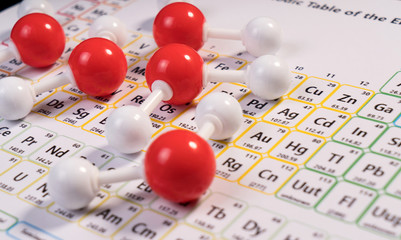
How Covalent Bonds Form Between Atoms and Create Molecules

192721777

An independent consultant in the field of health care analytics, Mario Atoyan was a teacher with the Warwick Public Schools. As a science teacher, Mario Atoyan achieved top school rankings and made use of in-depth knowledge of general sciences.

General sciences study all things related to our every day lives. One of the fundamental chemical processes driving how the natural world operates is covalent bonding. Taking place between non-metal atoms, covalent bonding involves overlapping of atoms’ outermost orbitals, such that unpaired electrons within bonding atoms are shared.

These shared electrons move within orbitals of both atoms, with an attraction between the positively charged nuclei and negatively charged electrons forming a covalent bond that binds the two atoms. A determinant of the type of covalent bond is how many pairs of atoms are shared.

A common single covalent bond molecule is hydrogen chloride, which involves chlorine and hydrogen atoms bonding. One of chlorine’s seven valence electrons is unpaired, while hydrogen has a single valence electron that is also unpaired. These two electrons complete their outermost energy level through sharing that electron.

By contrast, nitrogen contains five valence electrons, three of which are unpaired. When bonding with hydrogen it requires three single unpaired electrons to complete the valence energy shell and create ammonia. Thus, the molecule NH3 contains one nitrogen atom and three hydrogen atoms.

Transport of Pathogen Surrogates in Soil Treatment Units: by Janet Atoyan

Introduction Septic tank effluent (STE) contains pathogenic microorganisms, such as enteric viruses and bacteria, which can cause waterborne diseases and pose a public health risk if not properly treated. Onsite wastewater treatment systems (OWTS) are commonly used in suburban and rural areas in the United States and elsewhere. A conventional OWTS consists of a septic tank and associated soil treatment unit (STU), or drainfield, where attenuation and/or removal of microbial contaminants can take place through interactions with the soil, preventing their transport to groundwater. Nevertheless, contamination of groundwater below the STU is a concern, especially in areas with shallow groundwater tables. In order to protect drinking water, the separation distance between the infiltrative surface of the STU and fluctuating water table has to be determined on a site-by-site basis, and seasonal variations in separation distance have to be considered to avoid microbial contamination. The US EPA [1] recommends a minimum separation distance of 45 cm, regardless of soil chemical and physical characteristics. However, separation distance requirements in the USA vary widely by state, region and sensitivity of receiving waters to contaminant load. Furthermore, differences in soil properties (e.g., texture, structure, pH) are known to affect STU performance, which may lead to differences in removal of viruses and bacteria [1–3].

Transport of Pathogen Surrogates in Soil Treatment Units

by Janet Atoyan

1. Introduction

Septic tank effluent (STE) contains pathogenic microorganisms, such as enteric viruses and bacteria, which can cause waterborne diseases and pose a public health risk if not properly treated. Onsite wastewater treatment systems (OWTS) are commonly used in suburban and rural areas in the United States and elsewhere. A conventional OWTS consists of a septic tank and associated soil treatment unit (STU), or drainfield, where attenuation and/or removal of microbial contaminants can take place through interactions with the soil, preventing their transport to groundwater. Nevertheless, contamination of groundwater below the STU is a concern, especially in areas with shallow groundwater tables.

Transport of Pathogen Surrogates in Soil Treatment Units.

Written and published by Janet Atoyan, Mario Atoyan’s wife.

Segmented mesocosms (n = 3) packed with sand, sandy loam or clay loam soil were used to determine the effect of soil texture and depth on transport of two septic tank effluent (STE)-borne microbial pathogen surrogates—green fluorescent protein-labeled E. coli (GFPE) and MS-2 coliphage—in soil treatment units. HYDRUS 2D/3D software was used to model the transport of these microbes from the infiltrative surface. Mesocosms were spiked with GFPE and MS-2 coliphage at 105 cfu/mL STE and 105–106 pfu/mL STE, respectively. In all soils, removal rates were >99.99% at 25 cm. The transport simulation compared (1) optimization; and (2) trial-and-error modeling approaches. Only slight differences between the transport parameters were observed between these approaches. Treating both the die-off rates and attachment/detachment rates as variables resulted in an overall better model fit, particularly for the tailing phase of the experiments. Independent of the fitting procedure, attachment rates computed by the model were higher in sandy and sandy loam soils than clay, which was attributed to unsaturated flow conditions at lower water content in the coarser-textured soils. Early breakthrough of the bacteria and virus indicated the presence of preferential flow in the system in the structured clay loam soil, resulting in faster movement of water and microbes through the soil relative to a conservative tracer (bromide).

This is not Mario Atoyan’s own words. Mario Atoyan got this from https://www2.ed.gov/about/overview/focus/what.htmlwebsite.

The U.S. Department of Education is the agency of the federal government that establishes policy for, administers and coordinates most federal assistance to education. It assists the president in executing his education policies for the nation and in implementing laws enacted by Congress. The Department’s mission is to serve America’s students-to promote student achievement and preparation for global competitiveness by fostering educational excellence and ensuring equal access.

In 2007–08, the Department’s elementary and secondary school programs served approximately 55 million students (pre-K through grade 12) attending some 100,000 public schools and 34,000 private schools. Department programs also provided grant, loan and work-study assistance to about 10 million undergraduate students. *

When Congress created the Department in 1979, it declared these purposes:

  1. to strengthen the Federal commitment to ensuring access to equal educational opportunity for every individual;
  2. to supplement and complement the efforts of States, the local school systems and other instrumentalities of the States, the private sector, public and private educational institutions, public and private nonprofit educational research institutions, community-based organizations, parents, and students to improve the quality of education;
  3. to encourage the increased involvement of the public, parents, and students in Federal education programs;
  4. to promote improvements in the quality and usefulness of education through federally supported research, evaluation, and sharing of information;
  5. to improve the coordination of Federal education programs;
  6. to improve the management and efficiency of Federal education activities, especially with respect to the process, procedures, and administrative structures for the dispersal of Federal funds, as well as the reduction of unnecessary and duplicative burdens and constraints, including unnecessary paperwork, on the recipients of Federal funds; and
  7. to increase the accountability of Federal education programs to the President, the Congress and the public. (Section 102, Public Law 96–88)

Mario Atoyan says thank you for reading.

Repairing Headphones and LCD Screens at Home

With diverse work experience including teaching for ten years in the Warwick Public Schools, Mario Atoyan holds a bachelor of science in computer information systems and a teaching certificate in general science. In his free time, Mario Atoyan enjoys spending time with his family and hiking with his dog. He also enjoys buying broken mechanical items and returning them to good working order.

Some items can be easily repaired at home without the need for disposing of them or taking them to a professional to fix. Examples of items that can be repaired without any special technical equipment are headphones and LCD screens.

Headphones, for example, are very likely to break with constant use. Wires will fray and detach from the body with time, and one way to solve this problem is to use Plasti Dip. Pouring a little of the liquid plastic product into a container and using a small artist’s paintbrush to cover the exposed area of the wires with layers of the product will create a thick plastic seal that can mend the cable and secure it to the headphone body.

Another common problem is dead or stuck pixels that may appear on LCD computer monitors, television, and cellphone screens. They can often be fixed at home with computer programs like JScreenFix and Killdeadpixel, or by applying a little pressure with a damp cloth to the area of the screen with the device turned off.

Design a site like this with WordPress.com
Get started